
Fix That Leaky Water Heater Now
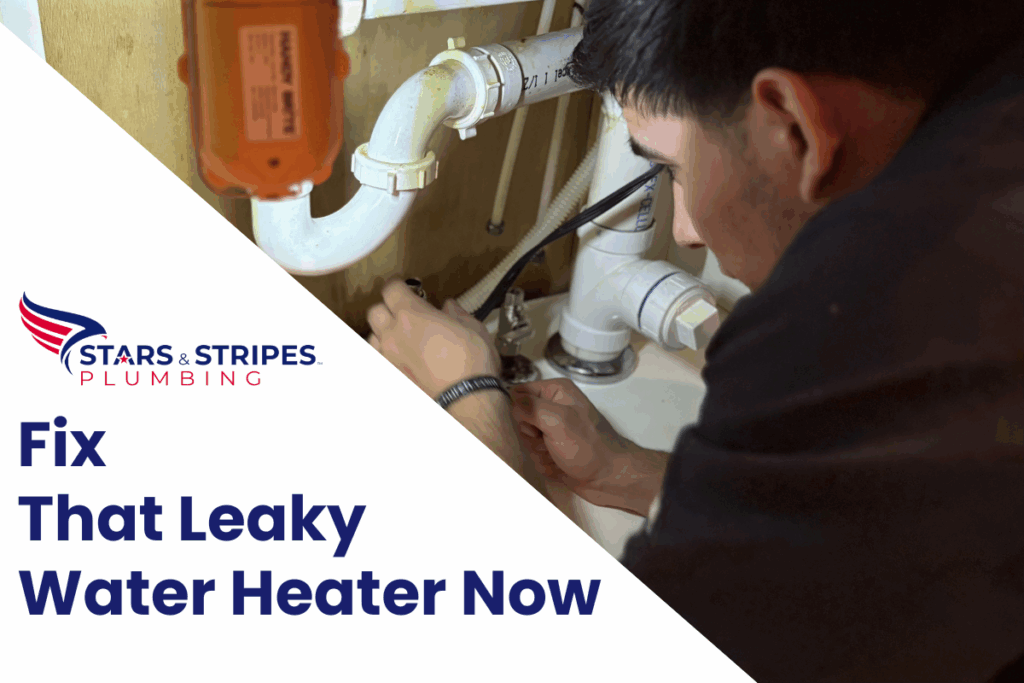
Don’t risk damage. See why acting fast on leaks saves money and protects your home. When your water heater starts to leak, time is not on your side. That small puddle under the tank may seem harmless, but it often signals a larger issue waiting to escalate. Delaying repairs can lead to major damage, higher costs, and even safety hazards. At Stars and Stripes Plumbing, we help homeowners throughout Lake Stevens and Snohomish County take quick action. With veteran-led service and a reputation for precision and honesty, our team delivers fast solutions that protect your home and peace of mind. Let’s explore how to recognize a leak, why quick action matters, and what you can do right now. How to Spot a Leaky Water Heater Not all leaks are obvious. Some start slowly and silently, causing hidden damage before you’re even aware there is a problem. Watch for these signs: Water pooling beneath or around the water heater Rust spots or corrosion on the base or valves A hissing or popping noise during heating cycles Lower hot water pressure or inconsistent temperature Discolored water coming from hot taps A recent spike in your water bill without explanation “Trevor came early, was professional, and spotted other issues we missed. He worked within our budget and solved a major problem without tearing into the walls.” – Daylon H., Granite Falls If any of these signs show up in your home, take them seriously. They often point to bigger problems that need immediate attention. The Risks of Waiting to Fix a Leak Putting off a water heater repair can lead to far worse issues. Here are just a few reasons to act now: 1. Property Damage Can Escalate A slow leak can turn into a flood if the tank ruptures or valves fail completely. Water can damage flooring, drywall, and belongings. It can also lead to mold growth, which is costly to remove. 2. Serious Safety Concerns Leaking water near electrical components is a fire hazard. Faulty temperature valves can cause scalding water. In rare cases, extreme pressure can lead to tank explosions. 3. Higher Energy Bills A damaged water heater has to work harder to do its job. This inefficiency can significantly raise your utility costs each month. 4. Voiding Your Warranty Most water heater manufacturers require timely maintenance. Ignoring a leak could void your warranty and leave you covering the full cost of replacement. What You Can Do Right Now Our team at Stars and Stripes Plumbing is equipped to help homeowners across Lake Stevens and nearby areas with fast, effective repairs. Here’s what we offer: Same-Day Leak Assessments Our licensed professionals check for common failure points including the temperature and pressure relief valve, inlet and outlet pipes, and the tank shell itself. Fast Valve and Connection Repairs If the issue is with a valve or fitting, we can usually repair it during the same visit. We carry common parts and can source brand-specific components quickly. Tank Flushing and Sediment Removal Hard water causes mineral buildup, which can eat away at the tank interior. A professional flush can often extend the life of your unit. Full Tank Replacements If your water heater is beyond repair, we offer installation services for new units with financing and support for local utility rebates. Explore More: Water Heater Repair Services Also Serving: Lake Stevens Plumbing Why Homeowners Trust Us Stars and Stripes Plumbing is a veteran-owned business that delivers dependable plumbing services throughout Snohomish County. Our founder, Trevor, built this company on the same values he upheld in military service: discipline, integrity, and a commitment to protecting others. With us, you receive: Courteous, uniformed professionals who arrive on time Clear, no-pressure quotes with no surprise fees Fully licensed and insured service Flexible scheduling including early mornings and evenings Need Help Now? Contact Us Areas We Serve We provide fast service to homes in: Lake Stevens Monroe Snohomish Granite Falls Everett Marysville Not in this list? Call us to check availability in your area. Act Fast. Book Your Water Heater Inspection Today. A leaking water heater won’t fix itself. The longer you wait, the more it could cost you. Let our veteran team deliver the solution you need—fast, professional, and backed by values you can trust. Call Now: (425) 434-9320) Book Online: Schedule Service Frequently Asked Questions How much does it cost to fix a leaking water heater? The cost depends on the issue. A simple valve replacement might cost between $150 and $300. A full replacement could range from $1,200 to $2,500 depending on the model and labor involved. Is it safe to leave a water heater leak overnight? No. Even a small leak can cause damage or lead to further failure overnight. Water near electrical systems can also be dangerous. We recommend shutting off water and power to the unit and calling for help immediately. Can I fix a leaking water heater myself? Homeowners can sometimes tighten a loose connection or drain the tank. However, for anything involving gas, electricity, or tank damage, it is safer and more cost-effective to call a licensed plumber. The cost depends on the issue. A simple valve replacement might cost between $150 and $300. A full replacement could range from $1,200 to $2,500 depending on the model and labor involved. No. Even a small leak can cause damage or lead to further failure overnight. Water near electrical systems can also be dangerous. We recommend shutting off water and power to the unit and calling for help immediately. Homeowners can sometimes tighten a loose connection or drain the tank. However, for anything involving gas, electricity, or tank damage, it is safer and more cost-effective to call a licensed plumber.
The Truth About Water Filtration Systems (And Why Every Family Needs One)
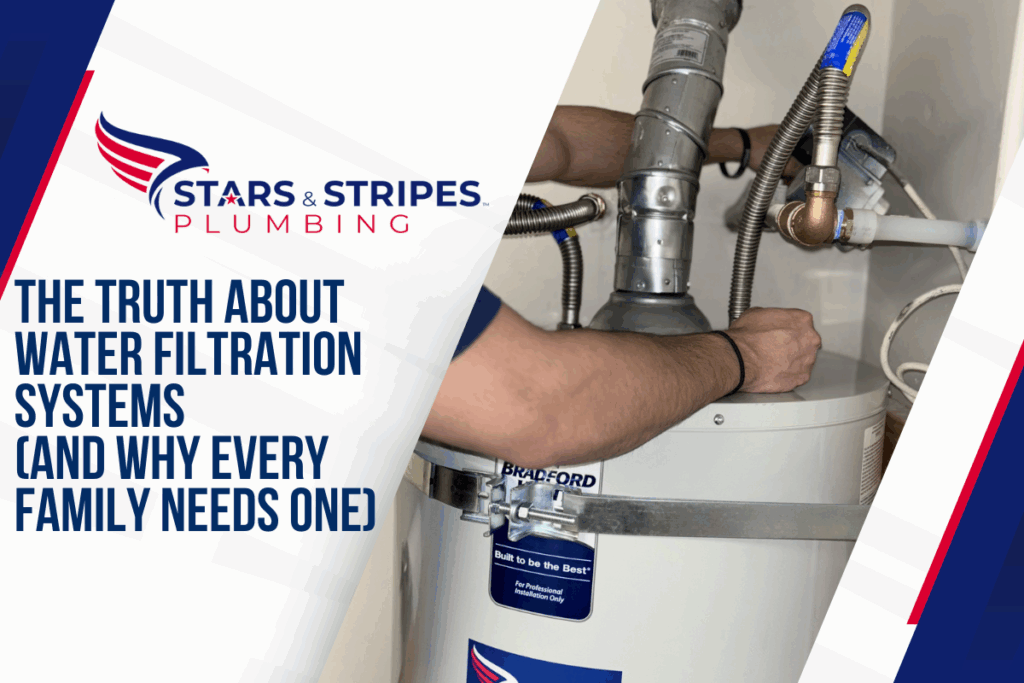
Clean, reliable water is something many Americans take for granted. We turn on the tap and assume what flows out is safe. But the truth is, there’s often a hidden world of contaminants and chemicals in our water supply that go unnoticed—until they start affecting our health, home, and peace of mind. At Stars and Stripes Plumbing, we don’t just solve surface-level problems. We operate with the precision, honor, and dedication that comes from our roots in military service. We believe every American family deserves water they can trust, and that’s where water filtration systems come into play. This article lays out the hard facts—no fluff, no gimmicks—on why water filtration isn’t optional anymore, especially for families looking to protect their loved ones and preserve the longevity of their plumbing systems. What’s Really in Your Water? A Look at Tap Water Quality Municipal water goes through treatment plants, but that doesn’t guarantee purity. According to the Environmental Working Group (EWG), over 320 pollutants have been detected in U.S. tap water. Many of these substances, such as lead, arsenic, nitrates, and “forever chemicals” (PFAS), exceed the levels considered safe by the latest health research. Common Contaminants in Washington’s Tap Water: Lead – Often from old household pipes. Chlorine – Used to disinfect but can dry out skin and release harmful byproducts. Nitrates – Common in rural or agricultural regions; dangerous to infants. PFAS chemicals – Found in some local water supplies; linked to cancer and reproductive harm. Aging infrastructure is part of the problem. In many Washington communities, outdated plumbing systems are still in service, putting families at risk. Even when city water meets government standards, those standards haven’t always kept up with current scientific understanding. The takeaway? Just because water is “legal” doesn’t mean it’s safe. The Hidden Impact of Unfiltered Water on Your Health and Home The effects of poor water quality extend far beyond taste or smell. Over time, unfiltered water silently chips away at your health and your home’s systems. Health Risks of Contaminated Water: Children and infants are more vulnerable to lead and nitrate exposure. Skin and respiratory irritation from chlorinated water during showers. Long-term exposure to low levels of contaminants can increase the risk of cancer and neurological problems. How It Damages Your Home: Scale and mineral buildup in pipes and water heaters, shortening their lifespan. Soap scum and hard water stains that are difficult to clean. Appliance failure due to sediment accumulation. Think of your plumbing like your body’s circulatory system—if you want long-term performance, you have to keep it clean. A water filtration system is like a shield for your family and your infrastructure. Types of Water Filtration Systems (And Which Is Right for Your Home) There’s no one-size-fits-all system when it comes to filtration. The right solution depends on your water source, the contaminants present, and your household’s needs. Here are the most common types of filtration systems: 1. Activated Carbon Filters Removes chlorine, sediment, and some VOCs. Ideal for improving taste and odor. Typically used in under-sink or countertop units. 2. Reverse Osmosis (RO) Systems Removes a broad range of contaminants: lead, fluoride, arsenic, nitrates. Can be installed under the sink or as a whole-house solution. Slower process but highly effective. 3. Whole-House Water Filters Installed at the main water line. Treats water before it reaches any fixture. Protects appliances and provides filtered water from every tap. 4. UV (Ultraviolet) Purification Kills bacteria and viruses using ultraviolet light. Doesn’t remove chemicals or particulates. Commonly paired with other filters for full protection. For Washington residents, where rural wells and aging city systems are common, a whole-house system with multiple layers of filtration offers the best defense. When installed by a qualified plumbing professional, these systems can offer long-lasting, reliable performance that safeguards both health and infrastructure. Why Water Filtration Is a Smart Long-Term Investment Let’s talk dollars and sense. Installing a water filtration system may seem like a big upfront cost—but the long-term savings and protection it provides make it a wise investment. Cost Benefits: Fewer plumbing repairs from mineral scale or corrosion damage. Extended lifespan of appliances like water heaters and dishwashers. Lower medical costs from fewer illness-causing contaminants. Savings on bottled water, which costs more over time and creates plastic waste. Added Property Value: Today’s homebuyers are more conscious than ever about wellness and sustainability. A professionally installed filtration system adds appeal and long-term value to your property. Environmental Impact: Reduces dependency on single-use plastics. Supports sustainable household habits. Minimizes chemical runoff and wastewater contamination. Investing in filtration is about taking control—control over your home, your health, and your financial future. It’s a choice built on responsibility, discipline, and care—values that guide everything we do at Stars and Stripes Plumbing. When to Call In a Plumbing Expert Installing a water filtration system isn’t like screwing in a light bulb. There are critical decisions to be made about: Water pressure Filter type System compatibility Proper placement and code compliance Signs it’s time to talk to a plumbing professional: You’ve experienced strange odors or tastes in your water. You see white scale deposits around faucets and showerheads. You rely on well water or live in a rural area. You’re using multiple point-of-use filters that still aren’t delivering results. You want to increase home value or modernize your plumbing infrastructure. A licensed plumber with deep knowledge of plumbing services in Washington will assess your situation, test your water if needed, and recommend a system tailored to your household. At Stars and Stripes Plumbing, we understand the importance of doing the job right. That means precision in installation, clear communication, and long-term reliability—values we carried with us in service and continue to deliver in every customer interaction. Final Thoughts: Clean Water Is a Duty, Not a Luxury When it comes to safeguarding your home and family, clean water isn’t just another feature—it’s a non-negotiable. With so many unseen threats in our water supply, installing a reliable filtration system is one of the most
How to Tell If Your Tap Water Is Unsafe (And What to Do About It)

There’s a certain pride in maintaining a well-run home. Every detail matters—from your HVAC filters to the sound of your sump pump. But what about the water running from your faucet? If you’re like most homeowners, you rarely question it—until something doesn’t seem right. At Stars and Stripes Plumbing, we know what it means to take responsibility seriously. As a veteran-owned, community-rooted company, we’ve seen firsthand how hidden plumbing issues—like contaminated tap water—can undermine the health and safety of a household. Our mission is to help families across Washington take charge of their home’s water quality with confidence, clarity, and care. In this guide, we’ll show you how to identify signs your tap water may be unsafe, what causes those issues, and what steps you can take to restore trust in your plumbing. How to Identify Unsafe Tap Water: Visual, Smell, and Taste Clues Not all water contamination is visible to the naked eye—but many times, your senses offer the first line of defense. Sight: Discoloration or Cloudiness If your water appears: Brown or orange – This could be rust from old pipes. Cloudy or milky – Often caused by air bubbles or high mineral content. Green or blue tint – Potential sign of copper corrosion. Cloudiness that disappears from the bottom up after the water sits is usually air. Persistent discoloration, however, is worth investigating. Smell: Odors that Signal Trouble Rotten egg smell suggests hydrogen sulfide gas, common in wells or poorly maintained heaters. Chlorine-like smell might mean over-chlorination by your municipal water supplier. Musty or earthy smell can indicate bacterial or algal presence. Taste: An Off-Putting Flavor Metallic or bitter taste might indicate iron, manganese, or lead. Salty taste could point to elevated chloride or sulfates. Chemical or bleach flavor may suggest disinfection byproducts. These sensory clues are warning signs that your water—and potentially your plumbing—needs closer attention. Why Tap Water Can Become Contaminated Safe water isn’t just about where it comes from—it’s also about how it travels. Even clean water can be compromised once it enters outdated or damaged plumbing systems. Aging Plumbing Infrastructure According to the EPA, lead exposure from pipes remains a serious issue in homes built before 1986. Galvanized steel pipes, once common, are also prone to rust and internal corrosion, which can leak metals or harbor bacteria. Backflow Contamination When pressure in your plumbing system reverses, water can flow backward—potentially drawing contaminants from toilets, irrigation systems, or industrial sources into your clean supply. This often occurs without a proper backflow preventer. Water Heater Sediment Minerals like calcium and magnesium can accumulate at the bottom of your water heater, creating a breeding ground for bacteria or metallic tastes if not regularly flushed. Municipal Supply Issues Even with treatment, municipal water can occasionally carry traces of pesticides, nitrates, or chlorine byproducts—especially after heavy rains, industrial spills, or treatment failures. For homes using private wells, risks are higher. The CDC advises well owners to test their water annually for bacteria, nitrates, and pH balance, as these systems don’t receive the same oversight as public utilities. Testing: How to Confirm If Your Water Is Unsafe Suspecting a problem is one thing—confirming it is another. There are reliable methods to test your tap water for safety and contaminants. 1. At-Home Water Test Kits These are a quick first step and can detect: Lead Chlorine Hardness (calcium/magnesium levels) pH balance Nitrates However, their accuracy varies. They’re best used as a preliminary measure before professional evaluation. 2. Certified Laboratory Testing For more thorough analysis, submit a sample to a Washington State-certified lab. These facilities test for a broader range of contaminants, including: Bacteria like E. coli Heavy metals (lead, copper, arsenic) Volatile organic compounds (VOCs) Fluoride and nitrates Many counties in Washington provide access to local labs through the Department of Health website, offering peace of mind through detailed, regulated results. 3. Plumbing Inspections Sometimes the problem isn’t the water source—it’s the plumbing. A licensed plumber professional can inspect your system for: Pipe material degradation Leaks or blockages Improper connections Water heater sediment Routine inspection is especially critical in older homes, where hidden corrosion can quietly compromise safety. Want to get ahead of plumbing issues? Explore our professional plumbing inspections. What to Do If Your Water Is Unsafe If testing confirms contamination, don’t panic. There are solutions—most of which begin with your plumbing system. Replace Hazardous Pipes Lead or corroded galvanized pipes should be replaced with modern, safer alternatives like copper or PEX. This ensures clean water delivery and prevents recontamination. Install Backflow Prevention Devices These are essential if your system connects to sprinkler systems, garden hoses, or other potential contamination points. They ensure water flows in one direction only—into your home. Water Heater Maintenance Flush your heater annually to remove sediment buildup. This not only improves water clarity but also extends the heater’s life and efficiency. Filtration as a Supplement, Not a Fix While whole-home or under-sink filters can remove many contaminants, they should never be used as a substitute for correcting the source of contamination—especially if plumbing materials or design are at fault. If you’re ready to protect your home’s water from the ground up, our plumbing services in Washington are here to help. Preventing Future Problems with Safe Water Practices The best way to avoid unsafe tap water is to make preventative maintenance part of your home’s annual routine. Here’s how to stay ahead of the curve: Schedule Regular Plumbing Inspections Just like your HVAC system, your plumbing deserves routine attention. Annual inspections catch corrosion, slow leaks, and water quality issues before they escalate. Test Water Quality Twice a Year Especially in older homes or those with well systems, semi-annual testing ensures ongoing safety—even when no symptoms are present. Flush Faucets Regularly If you’ve been away from home or haven’t used a faucet in a while, run the tap for 1–2 minutes before use. This helps clear stagnant water from pipes, reducing the risk of contamination. Install Aerator Screens These devices trap sediment and debris before