
How to Shut Off Your Main Water Valve in Under 60 Seconds
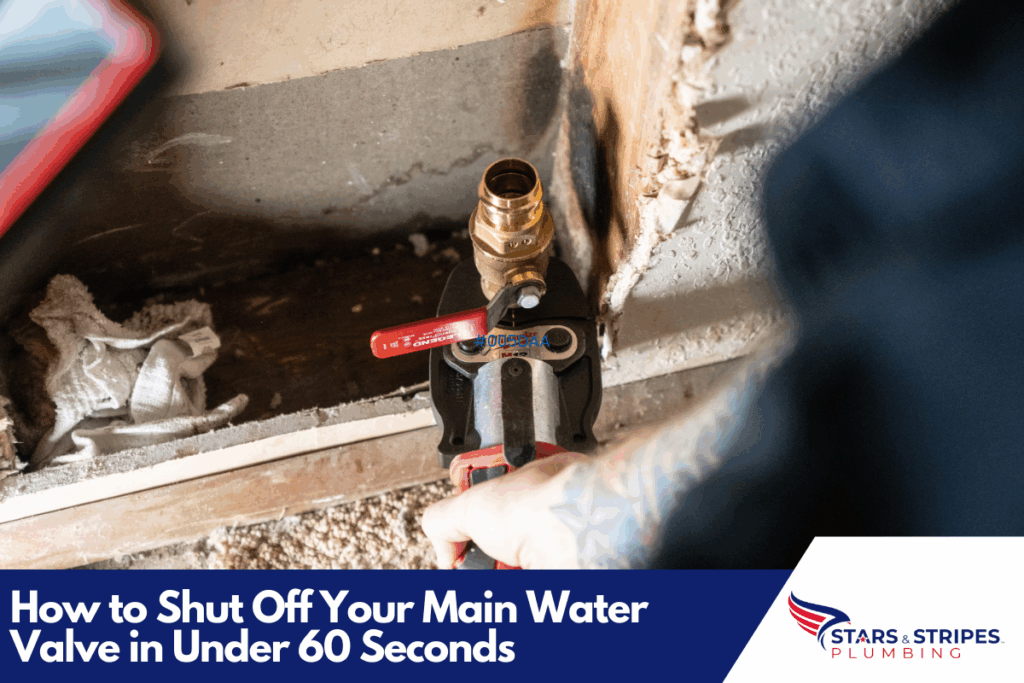
Shut Off Your Main Water Valve Imagine this: you come home and hear the hiss of water. You rush to the laundry room, and there it is. A pipe has burst, and water is spraying across the floor. Your first instinct? Panic. But if you know where your main water valve is and how to shut it off, you’ve already won the first battle. At Stars and Stripes Plumbing, we respond to water damage calls every week that could have been minimized or even prevented with one simple step: turning off the water supply. This guide explains how to shut off your home’s water in under 60 seconds and why every second counts when a leak starts. We’ll break it down by valve types, locations, and common mistakes, complete with visuals and a printable cheat sheet you can keep under your sink. Why You Need to Know This — Right Now If a burst pipe or failed valve goes unchecked, gallons of water damage your home’s structure, drywall, flooring, and electrical system every second. A pipe leaking at a 1/8” crack can dump 250+ gallons a day Insurance deductibles can exceed $1,000 for water damage claims Most damage happens in the first 5–10 minutes, long before help arrives Knowing how to act quickly gives you control. And that’s precisely what this guide is here for. Step 1: Identify the Right Shut-Off Valve Your Main Water Shut-Off Valve (Whole House) This valve controls all water entering your home. Turning it off stops water to every fixture, sinks, toilets, showers, and appliances. Where You’ll Find It: Inside: Most commonly in the garage, basement, utility closet, or near the water heater Outside: Near the foundation, under a rectangular metal or plastic lid close to the street (meter box) Tip: If you’re in Lake Stevens, Snohomish, or Monroe, your indoor valve is likely near the front-facing wall of your home or by the water heater. What It Looks Like: There are two main types of valves: Gate Valve (Round Handle) Turn clockwise to close (righty tighty) It may take several turns to entirely shut off Often found in older homes Ball Valve (Lever Handle) Turn 90° so it’s perpendicular to the pipe Fast shutoff in one motion Common in newer homes and remodels Best practice: Label your valve with a tag and keep a flashlight nearby. Step 2: Shut It Off in Under 60 Seconds For a Ball Valve (Lever Handle): Grasp the handle firmly. Turn the lever 90 degrees until it is perpendicular to the pipe. You’ll often hear the water flow stop immediately. Time to complete: 5–15 seconds. For a Gate Valve (Round Wheel): Turn the wheel clockwise until it stops. This may take 4–6 full turns. Do not over-tighten — this can damage older valves. Time to complete: 30–45 seconds. If the valve is stuck, don’t force it with tools. Call us for assistance — we can safely replace or upgrade it. Step 3: Confirm the Water Is Off Turn on a cold tap in the sink or tub If the water flow stops or slows to a drip, you’re good Still running? Double-check you closed the main and not a fixture valve If the main valve fails to stop the flow, the issue could be: A broken gate valve stem A failed pressure regulator A secondary supply line bypass (rare) In that case, call us immediately for emergency help. Step 4: Prepare Your Household It’s not enough that you know where the valve is. Everyone in your household, spouse, kids, roommates, should be familiar with it too. Here’s how to get prepared: Create a Valve Location Tag: Use tape, a printed label, or a valve tag (we offer these free on emergency service calls) Post a “Shut-Off Instructions” Sheet: Include your valve type, step-by-step shutoff, and Stars and Stripes’ emergency number Store a Flashlight Nearby: Power outages and leaks often go hand-in-hand Test Twice a Year: Gently turn the valve to ensure it isn’t seized or corroded Add Our Number to Your Emergency Contacts: [(425) 3577028] What If Your Valve Is Outside? Many homes in Snohomish County have external shut-offs located near the street. These can be: Inside a meter box under a lid (requires a meter key or wrench) Marked with a city tag, often under gravel or lawn Need help identifying yours? We offer a flat-rate Shut-Off Mapping visit to locate, tag, and document your shut-off valves for future reference. Upgrades to Consider If your valve is: Rusted or stuck Inaccessible Unlabeled Hard for elderly or kids to operate …it may be time for an upgrade. We Recommend: Replacing gate valves with modern quarter-turn ball valves Installing a main shut-off extension for outdoor access Adding an automatic leak detection and shut-off system (e.g., Flo by Moen, LeakSmart) We’ve installed dozens of these across Snohomish County and can advise based on your home’s layout and needs. Real-World Example When a family in Granite Falls discovered a slab leak at 10 p.m., they didn’t know where the shut-off was. By the time we arrived, water had spread into two bedrooms and a hallway. Contrast that with another family in Monroe. They had labeled their shut-off with our help two months earlier. When their toilet valve failed, they shut off the water in under 30 seconds and saved thousands in potential repairs. The difference? Preparation. Frequently Asked Questions What if I live in an apartment or condo? Many multi-family homes have unit-specific shut-offs inside the unit, often near the water heater or under the kitchen sink. If not, contact your building manager or HOA for valve access info. Can I replace my shut-off valve myself? This depends on your plumbing skill level and local codes. In most cases, it’s safer and faster to have a licensed plumber handle the replacement, especially if soldering or pressure testing is required. Do you offer emergency shut-off assistance? Yes. If you can’t locate or operate your shut-off, call